AJPHI Fellowship in Patient-Centered Medical Writing
About Course
About This Fellowship
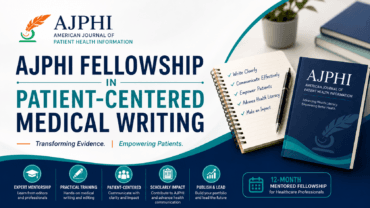
The AJPHI Fellowship Program is a 12-month structured training program offered by the American Journal of Patient Health Info for healthcare professionals interested in patient-centered health communication, medical writing, digital health, and scholarly publishing.
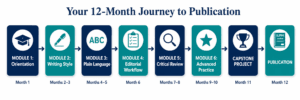
The fellowship includes six learning modules plus a capstone project, with training in plain-language medical writing, patient education, peer review and editorial decision-making, visual communication and infographics, responsible use of AI and digital health tools, and leadership in health communication. Fellows participate in AJPHI’s monthly editorial-board meetings, receive mentorship from the editorial team, and gain practical experience developing publishable patient-facing content.
Throughout the fellowship, participants work on projects such as patient-education articles, infographics, peer reviews, and scholarly communication activities. The final capstone is designed to contribute directly to the continued growth, scholarly impact, and future indexing goals of the American Journal of Patient Health Information (AJPHI). This fellowship is not just about writing. It is about transforming how medicine is communicated. It trains you to become the following:
- A patient-centered medical writer who speaks to people, not at them
- A skilled editor who upholds the highest standards of clarity and integrity
- A future leader in medical publishing who shapes how the world learns about health
|
“The goal of medicine is not only to treat disease but also to ensure that patients truly understand their condition, their choices, and their power to heal.” – AJPHI Editorial Philosophy |
Who Is This Fellowship For?
This program is designed for anyone who has medical or health expertise and wants to communicate it more powerfully:
- Medical doctors (MDs, DOs) at any stage of training
- Residents and medical students
- Nurses, nurse practitioners, and physician assistants
- Pharmacists and physical therapists
- Health informatics professionals and public health practitioners
- Anyone passionate about making health information accessible
About the Faculty

Dr. Amit Khanal MD, FACP
Dr. Amit Khanal is a board-certified physician, medical educator, and Assistant Professor at Wake Forest University School of Medicine. He also serves as Editor-in-Chief of the American Journal of Patient Health Info (AJPHI). His primary work focuses on advancing medical education and the responsible translation of clinical knowledge for healthcare professionals and the public.

Dr. Bibhusan Basnet, MD, MS, FACP
This course is led by Dr. Bibhusan Basnet, MD, MS, FACP, a board-certified internal medicine physician and Clinical Instructor at Wake Forest University School of Medicine. He practices hospital medicine at Frye Regional Medical Center in Hickory, North Carolina. Dr. Basnet is a graduate of UNC Chapel Hill’s Master’s Program in Health Informatics. He co-founded eHealthyInfo, a consumer health education platform focused on making evidence-based health information more accessible, understandable, and actionable for the public. Based in Huntersville, North Carolina, Dr. Basnet brings together years of frontline clinical experience, medical education leadership, and digital-health innovation. His work centers on empowering young healthcare professionals to communicate clearly, combat misinformation, and become trusted digital voices for their communities.
Himal Bikram Bhattarai, MD
Nikol
Preeti
Course Content
MODULE 1: Introduction to AJPHI & the Fellowship
-
1.1 Welcome to the Fellowship
-
1.2 AJPHI’s Mission: Why Patient-Centered Communication Matters
-
1.3 Understanding Your Audience: The Patient Perspective
-
PRACTICE EXERCISE: The Empathy Interview
-
1.4 At the end of the module , What will you be able to learn?
MODULE 2: Writing for AJPHI (Style & Structure)
MODULE 3: Plain Language Writing
MODULE 4: The Editorial Workflow
MODULE 5: Critical Review & Editorial Skills
MODULE 6: Advanced Editorial Practice
Student Ratings & Reviews