
The Organ Most People Forget to Protect After 40: Your Muscle
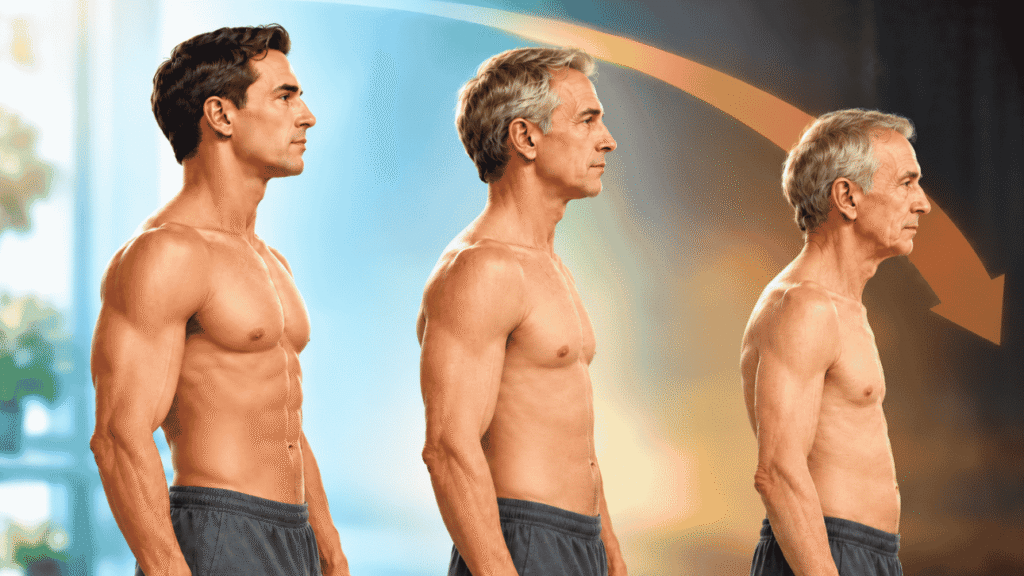

⏱ Quick Snapshot : 30-Second Read
An Organ? Absolutely! It’s one of your largest and most active organs. And after 40, you start losing muscle mass, whether you feel it or not.
How Fast? After 30, you lose 3 to 8% of your muscle each decade, and the loss speeds up after 60. We call it sarcopenia.
Why Care? Muscle stores blood sugar, helps stabilize it, drives your metabolism, protects your balance, and serves as your reserve for surviving illness or surgery. Losing it raises your risk of diabetes, falls, and frailty.
The Sneaky Part? The scale may not show any change, because the lost muscle is replaced by fat. You look almost the same while getting weaker inside.
The Fix? Lift something heavy 2 to 3 times a week (with proper form, of course), eat enough protein, keep moving, and protect your sleep. You can slow muscle loss and rebuild it at almost any age.
Introduction
When you think about the organs to protect after 40, you probably picture your heart, brain, liver, or kidneys. But one huge part of your body almost everyone forgets is your muscle.
And yes, muscle is an organ, one of the largest and most active you have. After 40, it’s quietly disappearing. This isn’t about looking smaller. It’s about whether, decades from now, you can still climb stairs, carry your own groceries, and live on your own. This one matters more than almost anyone realizes.
Muscle Loss Is Real, and It’s Already Happening
Think of your muscles like a car. Power is like acceleration: how quickly and how much you can move. Endurance is like the gas tank: how long you can keep going. As we age, the ability to accelerate declines faster than the fuel gets used up. So, while you may find walking long distances manageable, quick movements, like climbing stairs, start becoming more strenuous.
Even as early as your 30s and 40s, you start to lose muscle each year, often without realizing it. You might even notice it if you look down at your thighs; that thick muscle that pushes you up stairs and out of a chair is slowly thinning, year after year. The stats are these: after age 30, you lose roughly 3 to 8% of your muscle each decade, and after 60, it speeds up. The medical term is sarcopenia.
The tricky part is that the scale might not move at all, because the muscle you lost is quietly being replaced by fat. You look about the same, but inside, you’re getting weaker. It’s not only about size, either. You lose your fast, powerful fibers first, the ones that let you catch yourself when you trip or spring up quickly. So you don’t just get weaker. You also get slower.
Sometimes muscle loss is not gradual either. If your arm is in a cast, or you spend even a week in a hospital bed for any reason, you can lose muscle that takes months to rebuild. Over a lifetime, women tend to lose even more than men, which makes this especially important to pay attention to.
How does it happen? It’s a combination of a few things. The nerves that keep your muscles toned and fire them start to fade, hormones like testosterone and growth hormone decrease, and with age your body gets less efficient at turning the protein you eat into muscle. Building slows while breakdown speeds up.
Why This Should Worry You a Little Bit
Muscle isn’t just for strength or looks. It runs some of the most important systems in your body.
Muscle is where a huge amount of your blood sugar gets stored, so having more means better blood sugar control, and less muscle really increases your risk of type 2 diabetes. It drives your metabolism, so less muscle means a slower metabolism, fewer calories burned, and fat that creeps on more easily. It protects your balance so you don’t fall. And it’s your body’s reserve, the strength that carries you through an illness, a surgery, or a hospital stay.
Neglecting our muscle health can quietly sneak up on us. Everyday tasks like climbing stairs or lifting groceries become a challenge, and our pace becomes slower. Grip strength, which is a crucial indicator of longevity and well-being, diminishes.
Left unchecked, this is the road to frailty. Falls aren’t something that just happens to a few people: about 1 in 4 adults 65 and older report falling each year, and for many, a single bad fall is the moment they lose their independence for good.
Weakness, decreased endurance, falls, even broken hips, and lost independence; that’s the actual cost of ignoring your muscle health. So, let’s start simple muscle workouts today and prioritize our health, as it’s never too late to embrace a stronger, healthier life!
How to Protect Muscle
At almost any age, you can slow muscle breakdown and even rebuild. These four steps can go a long way.
1. Lift Something Heavy
Do resistance training 2 to 3 times a week with weights, bands, or even just your body weight. This is the single most proven way to rebuild muscle, and even the American Heart Association notes it slows age-related decline in muscle and strength.
2. Eat Enough Protein
Calculate your daily allowance of protein and eat it across your meals rather than packing it all into one meal. Your body will digest and use it better that way.
3. Keep Moving
Stay active through the day. Take a short movement break every 45 minutes of desk work so that you don’t lose muscle quietly.
4. Protect Your Sleep
Get adequate sleep and guard your rest, because muscle rebuilds while you recover. Rest is especially important in between heavy workouts that target muscle.
One optional extra: creatine is among the safest, most researched supplements if you want a little more edge. More on that in the FAQ below.
The Bottom Line
The goal with this post is not to motivate you to become a bodybuilder. It’s to urge you to build enough strength today that your future self can still move, travel, climb stairs, get down on the floor to play with the grandkids, and live independently. This is a wake-up call to realize the importance of muscle health and a reminder that it’s never too late to start. Protect your muscles now, and your 80-year-old self will thank you.
Frequently Asked Questions
Is lifting weights dangerous when you’re older?
Not necessarily. When done with good form and a sensible starting weight, resistance training is one of the safest and most beneficial things you can do at any age. If you have a heart condition, joint problems, or haven’t exercised in a while, check with your doctor and consider a few sessions with a trainer to learn the movements.
Can I rebuild muscle if I’ve already lost a lot?
Absolutely, yes! Muscle responds to training, even in your 70s, 80s, and beyond. You may not be as fit as you were at 30, but consistent strength work reliably improves muscle, strength, and everyday function, even in people who start late.
How much protein do I actually need?
Older adults generally need more than younger ones to maintain muscle. A general rule of thumb is 1.2 to 1.5 grams of protein per kilogram of body weight per day. Try to spread protein evenly across meals rather than having one big serving. Your exact needs depend on your weight, activity, and health, so ask your doctor or a dietitian for a number that is right for you.
Do I need to join a gym?
Not necessarily. Exercises such as squats, sit-to-stands, push-ups, step-ups, and inexpensive resistance bands work well at home. The key is progressively challenging your muscles and slowly increasing the load. With good form, you don’t need a gym. If it’s your first time, though, consider a trainer to make sure you’re doing the workouts correctly.
Is creatine safe to take?
For most healthy people, creatine monohydrate at regular doses is among the best-researched and safest supplements. It can support strength gains alongside training. If you have kidney disease or another medical condition, check with your doctor first.
References
- Cleveland Clinic. (n.d.). Sarcopenia (muscle loss): Symptoms and causes. https://my.clevelandclinic.org/health/diseases/23167-sarcopenia
- Harvard Health Publishing. (2016). Preserve your muscle mass. Harvard Medical School. https://www.health.harvard.edu/staying-healthy/preserve-your-muscle-mass
- Volpi, E., Nazemi, R., & Fujita, S. (2004). Muscle tissue changes with aging. Current Opinion in Clinical Nutrition and Metabolic Care, 7(4), 405–410. https://pmc.ncbi.nlm.nih.gov/articles/PMC2804956/
- Centers for Disease Control and Prevention. (n.d.). Older adult falls data. https://www.cdc.gov/falls/data-research/
- American Heart Association. (2024). Strength and resistance training exercise. https://www.heart.org/en/healthy-living/fitness/fitness-basics/strength-and-resistance-training-exercise
Sign Up to Our Newsletter
Be the first to know the latest health updates.

