
How to Improve Your GFR Naturally | 5 Ways to Protect Your Kidneys

⏱ Quick Snapshot
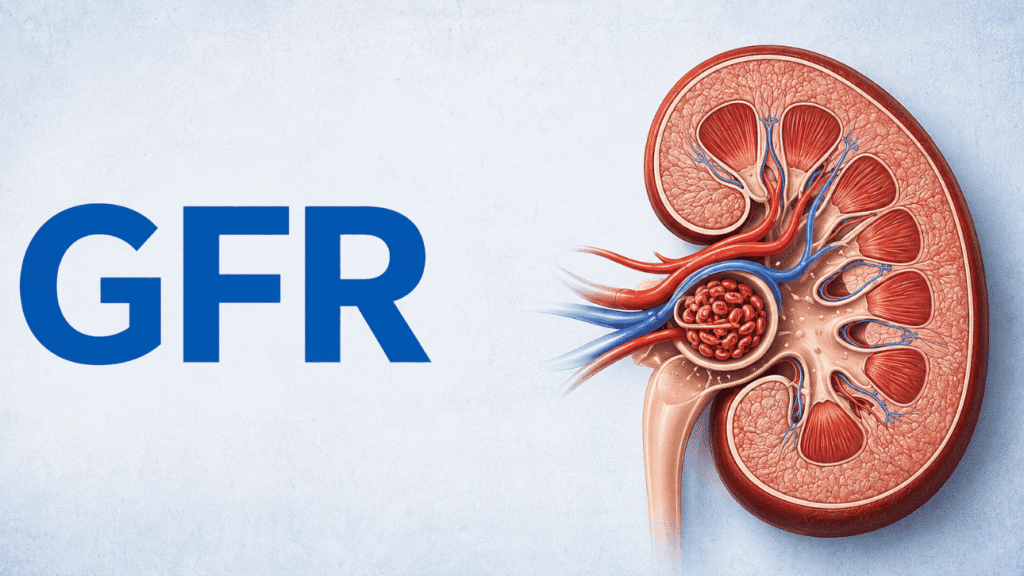
What Is GFR? It’s your kidney “report card,” which shows how well your kidneys clear out waste from your blood. Higher is better.
Why Does It Matter? Decline of kidney function is silent. You can lose up to 50% of their function and still feel completely fine. This number spots trouble long before you’d ever feel it.
Can You Improve It? You can protect it, slow its decline, and, in some cases, even improve it with a few simple habits.
What Helps Most? Watching your salt intake, maintaining your blood pressure and blood sugar, staying adequately hydrated for your situation, and being careful with painkillers.
When to See a Doctor The signs of declining kidney function are not readily apparent. So for chronic diseases like hypertension, diabetes, decreased urine volume, and frothy urine, these are red flags and should always be tested.
Introduction
When you get your blood work done, one of the most common tests is your kidney function, and most of us skip right past it. It’s called your GFR, and it’s one of the clearest early windows into your long-term health. What makes this especially unique is that you can lose up to 90% of your kidney function without any warning signs. So, with this blog, we aim to slightly increase your awareness of kidney function, expressed as a number known as GFR, and let’s get into it!
What GFR Actually Is
GFR stands for glomerular filtration rate. It is the rate at which your kidneys filter waste from your blood. To measure it, doctors do a blood test to check creatinine levels and calculate your GFR based on that. You can think of it as your kidney’s report card. Here’s roughly what the number means:
- 90 or above is the normal range.
- 60 to 89 can point to early kidney disease.
- 15 to 59 can mean kidney disease that needs real attention.
- Below 15 can mean kidney failure.
Of course, based on your health, the implications for these values might differ slightly, but the rule of thumb is that the higher your GFR, the more filtering power you have left. Plenty of things can drag it down over the years, including high blood pressure, diabetes, smoking, obesity, a family history of kidney failure, and simply getting older. Frequent use of painkillers is also an important cause, and we’ll come back to that one because it’s the one that worries doctors the most.
Sometimes GFR might read low even when levels are normal. Some examples include having a large meat meal before the test, creatine supplements, heavy muscle training, hard exercise, or even simple dehydration. So one low reading isn’t a diagnosis. It is, however, a must to look more closely, repeat the test, and check in with your doctor!
5 Ways to Protect and Improve Your GFR
1. Watch Salt Intake
When it comes to your kidneys, one of the most important causes of strain is your daily salt intake. Most guidelines suggest keeping sodium intake to about 2,000 to 2,300 mg a day, which is roughly one teaspoon of salt total from everything you eat. And here’s something to be mindful of. Most of our salt isn’t coming from the shaker on our table. It’s hiding in bread, packaged snacks, sauces, pickles, and restaurant food, and we end up consuming way too much of it.
Why does it matter this much, you might ask? The thing is, too much salt raises your blood pressure, making your body hold onto fluid and pushing more protein into your urine, which causes your kidneys stress. In fact, one large study of nearly half a million people found that adding salt to food more often was linked to a meaningfully higher risk of chronic kidney disease. So, to meaningfully control your salt intake, lean toward more plant foods like vegetables, fruits, legumes, and whole grains, and go a little easier on red meat.
2. Control Your Blood Pressure
This one is huge. Sustained high blood pressure damages the blood vessels in your kidneys, thus affecting the filtration units in your kidneys. And it also works both ways: high pressure damages your kidneys, and damaged kidneys push your blood pressure even higher. It becomes a loop that feeds itself.
Newer guidance suggests an even tighter control of blood pressure, with many people aiming for a top number (systolic) under 120 when that’s safe and appropriate for them. The benefit is strongest in people who already have protein leaking into their urine. If there’s one thing you take away from this article, it is this: please take your blood pressure medication and maintain routine doctor visits because prevention is oftentimes the only way to go.
3. Keep Diabetes in Check
Just like hypertension, high blood sugar, year after year, is one of the fastest ways to wear down your kidneys. Too much sugar in the blood slowly damages the filters in kidneys, until they start to leak and clog. And people who have both diabetes and kidney disease tend to decline much faster than those with kidney disease alone. Keeping your blood sugar levels steady is one of the most direct things you can do to protect your GFR. Consistent habits, regular monitoring and proper adherence to diet and medications will delay the progress of kidney decline and to some degree improve kidney function as well.
4. Hydrate the Right Way
You’ve must’ve heard “drink more water” a thousand times. Ever wondered how true it is for your kidneys? Data suggests that good hydration helps, but there’s no single quantity of water that fits everyone. If you’re healthy or in early kidney disease, the main rule is just this: don’t let yourself get dehydrated, because your kidneys need water to flush waste out properly. However, if you have advanced kidney disease or a heart condition, drinking too much can actually cause genuine harm. So, always consult your doctor if you are unsure or are being treated for other diseases. And here’s a fun fact for you: your urine doesn’t need to be crystal clear. A pale, light yellow is completely fine.
5. Watch Your Pills
Some of the most common pills people take without a second thought can quietly harm the kidneys. Everyday painkillers like ibuprofen and naproxen, the over-the-counter ones people grab for every headache, can significantly damage your kidneys over time when taken at high doses or too often. Try to limit them, and ask your doctor about safer options for pain, like topical rubs or patches. Also keep in mind that just because something is labeled “natural” or “herbal” doesn’t mean it’s safe for your kidneys. Some alternative remedies have actually been linked to real kidney injury. So, always consult your doctor before taking anything.
But there are some drugs that are protective as well. There’s a class of prescription medicines called SGLT2 inhibitors, originally made for diabetes, that research now shows can slow kidney disease progression by roughly a third. This benefit holds up whether or not you have diabetes, and across different stages of kidney function. For a lot of people, it’s been a real turning point.
The Bottom Line
Your GFR isn’t just a random number in your lab report. It’s one of the clearest and accurate depictions of your long-term kidney health, and one of the few findings which warns you early, while there’s still plenty of time to act. The best way to protect your kidneys isn’t a pill or a scan. It is something you can do by mindfully watching your salt, controlling your blood pressure, managing your blood sugar, hydrating adequately for your situation, and taking your medications under the strict guidance of your doctor. You can also learn more about foods that support kidney health as part of your daily routine. Kept up over the years, these small habits buy your kidneys years of extra, healthier life.
Frequently Asked Questions
Can a low GFR go back up?
Sometimes, if it was caused by something temporary, such as dehydration, a medication, or an illness, your GFR can recover once it’s addressed. Long-standing kidney damage is harder to reverse, but the right treatment and lifestyle can slow or even stall further decline.
What’s my normal GFR?
Normal GFR ranges from 90 to 120, and naturally drifts down a little as we age. So a number that’s normal at 70 might be different from one at 30. That’s why it’s important to look at your GFR alongside your age, your urine tests, and your overall health. No one number fits all, so you’ll have to ask your doctor for that one!
Does drinking lots of water improve GFR?
Staying well hydrated supports healthy kidney function, but drinking extra water beyond your needs won’t further improve a healthy GFR. In fact, it can even be risky if you have advanced kidney or heart disease.
Are ibuprofen and other painkillers really that risky?
For occasional use in healthy people, they’re generally fine. But if taken regularly, at high doses over long periods, it can strain the kidneys. So, if you find yourself reaching for them often, it’s worth a conversation with your doctor.
Should I be worried if my GFR is between 60 and 89?
Not always, but it is very necessary to show it to your doctor! On its own, a mildly reduced GFR without other signs of kidney damage is common and often stable, especially at an older age. But your doctor will want to know if it’s dropping over time or paired with protein in your urine. The best move is to repeat the test and review it together. You can also use a simple kidney health check to track how your kidneys are doing over time.
Medical Disclaimer
Disclaimer: This article is for educational purposes only and is not a substitute for professional medical advice, diagnosis, or treatment. Never start, stop, or change a medication on your own, and always talk to a qualified healthcare professional about your kidney health, your test results, and what’s right for your specific situation.
References
- Tulane University. (2023). Self-reported frequency of adding salt to food and risk of incident chronic kidney disease. Tulane School of Public Health and Tropical Medicine. https://sph.tulane.edu/sphtm-research-shows-correlation-between-salt-intake-and-kidney-disease
- Nuffield Department of Population Health Renal Studies Group & SGLT2 inhibitor Meta-Analysis Cardio-Renal Trialists’ Consortium. (2022). Impact of diabetes on the effects of sodium glucose co-transporter-2 inhibitors on kidney outcomes: Collaborative meta-analysis of large placebo-controlled trials. The Lancet, 400(10365), 1788–1801. https://www.thelancet.com/journals/lancet/article/PIIS0140-6736(22)02074-8/fulltext
- National Institute of Diabetes and Digestive and Kidney Diseases. (n.d.). Estimating glomerular filtration rate (GFR). U.S. Department of Health and Human Services. https://www.niddk.nih.gov/health-information/professionals/clinical-tools-patient-management/kidney-disease
- National Kidney Foundation. (n.d.). Estimated glomerular filtration rate (eGFR). https://www.kidney.org/kidney-topics/estimated-glomerular-filtration-rate-egfr
Sign Up to Our Newsletter
Be the first to know the latest health updates.


