

Can You Really Live to 100? 10 Longevity Questions Answered by a Doctor
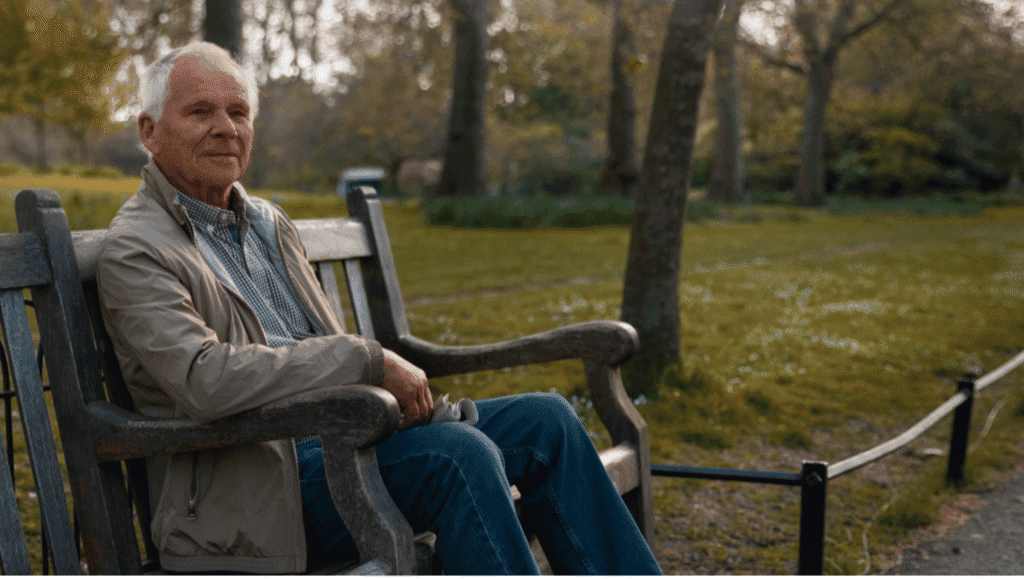

Wondering what actually helps you live longer, and what’s just clever marketing? This article takes a science-backed look at some of the biggest questions about aging, from supplements and biological age to exercise, sleep, blood tests, and genetics. Along the way, you’ll discover why it’s never too late to build healthier habits, what really influences longevity, and why focusing on your healthspan may matter even more than simply adding years to your life.
Every day, science entices us with the promise of a longer life. A supplement, a gadget, a test, a morning routine. It’s hard to know what’s real and what’s being sold to you.
So let’s get down to it today. Can we actually slow down aging? Can we reverse it? And is living to 100 a real possibility?
Below are straight-up answers to the ten questions people ask the most, and some of these answers might change how you think about your own aging!!
Watch: the science behind living longer, and what actually helps.
1. Do supplements really help you live longer?
Not really, no. In large studies, people who took multivitamins for years didn’t live any longer than people who took nothing. A few even did slightly worse.
The kicker is that nutrients from actual food are linked to a longer life, while the very same nutrients from a bottle usually aren’t. Your body seems to want food, not just capsules.
2. Is it too late to start after 50 or 60?
Not at all! And this might be the most important thing in this whole list.
In one study done on adults with an average age of 74, those who took up just a few healthy habits, such as eating clean and exercising moderately, had almost a third lower risk of dying compared to those who changed nothing.
So, it’s very worthwhile to start moving and eating well, no matter what age or even what state of health you are in. Of course, you should follow your doctor’s recommendations for your particular condition.
3. What is biological age, and should I test it?
Your biological age is how old your body behaves, in short, how functional the systems of your body are.
Two people can both be 50 on paper and have completely different bodies underneath. One might be able to run like a 40-year-old, while the other might have problems even walking up the stairs.
Caution must be exercised while doing biological tests, though. One review of dozens of aging tests found that many had no solid science behind them. Maybe sticking to doctors’ recommendation is the best idea for now. We’ll definitely update you as soon as anything changes!!
4. Why do some people look younger than their age? Genes or lifestyle?
(It’s a bit of both, and genes carry a bit more weight, maybe around 60%.) Some people are quite lucky and are dealt a slower-aging hand.
But lifestyle is fully under our control and might even be considered the thing that matters most on a fitness and longevity journey. For example, smoking can age your body by several years at the cellular level. Carrying excess weight does so as well, mostly affecting the heart. Proper nutrition and moderate exercise, however, will make a significant positive change in your cardiovascular and bone health.
You might not be able to pick and choose your genes, but on the other hand, your favorite veggie will definitely come to the rescue!
5. What’s the single most important habit after 40?
If I had to choose just one, it’s movement.
One study followed over 276,000 veterans. Those who combined eight healthy habits, regular activity among them, were predicted to gain up to two decades or more of life expectancy at age 40.
And staying inactive is, across a whole population, an even bigger risk to your lifespan than many people realize. If you fix only one thing this year, fix how much you move.
6. How much exercise do I actually need?
Most doctors suggest at least 150 minutes a week of moderate activity, plus some strength work.
But the simplest thing to track is your steps. Going from around 2,000 steps a day up toward 8,000 or 9,000 is linked to a large drop in the risk of dying early.
You don’t need to become an athlete. You just need to stop sitting still. More steps, less risk, it really is close to that simple.
7. Is strength training more important than cardio?
This question is like asking whether eating fruit is more important than eating vegetables. Both are important and necessary, and this question has been generated by corporations with great stakes in our choice.
Quality researches show that combining cardio and strength training helps our body perform better and actually lowers the risk of dying. Cardio alone still helps a lot and so does strength training. People who do either can meaningfully lower their risk compared to people who do neither.
So, really you should be doing both, and taking a balanced approach will strengthen your muscles, your bones as well as your heart.
8. Can poor sleep shorten your life, even if you eat well and exercise?
Yes, and this one comes as a surprise to a lot of people.
Sleeping less than seven hours a night is tied to about a 14% higher risk of dying early. Sleeping too much, over nine hours, is linked to an even higher risk, though that’s often a sign of an underlying problem rather than the cause.
And it’s not only about the hours. Poor-quality sleep, tossing and turning all night, waking often, or a wildly irregular schedule raises the risk on its own. Also, you can’t out-exercise a broken sleep routine, sadly.
So, please do yourself a favor and try to dedicate time to a proper sleep schedule, will you? We are actually concerned. ;)
9. What, if any, blood tests should people over 40 actually get?
Here’s a simple starting checklist to ask your doctor about by name:
- A lipid profile for cholesterol
- Fasting blood glucose or HbA1c for blood sugar
- Renal function test (creatinine and eGFR)
- A complete blood count
- Thyroid levels
- A one-time hepatitis C test
Vitamin D testing isn’t needed for everyone. It might be helpful if you’re older, have darker skin, or spend most of your time indoors. Beyond this list, some tests should be tailored to your own health and goals, so definitely talk it through with your doctor.
10. What is healthspan, and why does it matter more?
Lifespan is how long you actually live. Healthspan is how many years you spend healthy, independent, and free of disease.
What we’re trying to get at here is that adding years means little if those years are riddled with disease or you are in constant pain or dependent on someone else for your daily life.
So can we really live to 100? Maybe, for some people. But the goal is not just about adding years. It’s about staying strong, capable, and independent for as many of them as possible.
The Bottom Line
Aging is going to happen either way. How you age is still, in large part, up to you.
Move your body daily. Protect your sleep like it’s medicine. Get the right blood tests, not random supplements. And remember, it’s never too late to start.
Medical Disclaimer
Disclaimer: This article is for educational purposes only and is not a substitute for professional medical advice, diagnosis, or treatment. Always talk to a qualified healthcare professional about your own health, including which tests, exercise, or changes are right for you.
References
- Nguyen, X. T., Li, Y., Wang, D. D., Whitbourne, S. B., Houghton, S. C., Hu, F. B., Willett, W. C., Sun, Y. V., Djousse, L., Gaziano, J. M., Cho, K., Wilson, P. W., & VA Million Veteran Program. (2024). Impact of 8 lifestyle factors on mortality and life expectancy among United States veterans: The Million Veteran Program. The American Journal of Clinical Nutrition, 119(1), 127–135. https://doi.org/10.1016/j.ajcnut.2023.10.032
- Ungvari, Z., Fekete, M., Varga, P., Fekete, J. T., Lehoczki, A., Buda, A., Szappanos, Á., Purebl, G., Ungvari, A., & Győrffy, B. (2025). Imbalanced sleep increases mortality risk by 14–34%: A meta-analysis. GeroScience, 47(3), 4545–4566. https://doi.org/10.1007/s11357-025-01592-y
- Robb, C., Carr, P. R., Ball, J., Owen, A., Beilin, L. J., Newman, A. B., Nelson, M. R., Reid, C. M., Orchard, S. G., Neumann, J. T., Tonkin, A. M., Wolfe, R., & McNeil, J. J. (2023). Association of a healthy lifestyle with mortality in older people. BMC Geriatrics, 23(1), 646. https://doi.org/10.1186/s12877-023-04247-9
- Paluch, A. E., Bajpai, S., Bassett, D. R., Carnethon, M. R., Ekelund, U., Evenson, K. R., Galuska, D. A., Jefferis, B. J., Kraus, W. E., Lee, I. M., Matthews, C. E., Omura, J. D., Patel, A. V., Pieper, C. F., Rees-Punia, E., Dallmeier, D., Klenk, J., Whincup, P. H., Dooley, E. E., Pettee Gabriel, K., … Steps for Health Collaborative. (2022). Daily steps and all-cause mortality: A meta-analysis of 15 international cohorts. The Lancet Public Health, 7(3), e219–e228. https://doi.org/10.1016/S2468-2667(21)00302-9
- Choi, Y., Lee, D. C., Han, Y., Sung, H., Yoon, J., & Kim, Y. S. (2024). Combined association of aerobic and muscle strengthening activity with mortality in individuals with hypertension. Hypertension Research, 47(11), 3056–3067. https://doi.org/10.1038/s41440-024-01788-3
- Loftfield, E., O’Connell, C. P., Abnet, C. C., Graubard, B. I., Liao, L. M., Beane Freeman, L. E., Hofmann, J. N., Freedman, N. D., & Sinha, R. (2024). Multivitamin use and mortality risk in 3 prospective US cohorts. JAMA Network Open, 7(6), e2418729. https://doi.org/10.1001/jamanetworkopen.2024.18729
- Endocrine Society. (2024). Endocrine Society recommends healthy adults take the recommended daily allowance of vitamin D. https://www.endocrine.org/news-and-advocacy/news-room/2024
Sign Up to Our Newsletter
Be the first to know the latest health updates.


