
Plant Protein for Vegetarians: The 5 Best Sources to Eat

Written by
Kaveri Karki
📅
July 21, 2026
📋 Table of Contents
▼
⏱ Quick Snapshot: 30-Second Read
The Problem Most vegetarians get enough protein, but many fall short, not because they do not have a proper source, but because they eat the same source over and over again.
Build & Pair Build meals around legumes and soy as your main protein sources. Pair grains with legumes: rice with lentils, whole wheat bread with hummus.
Boost Use nuts and seeds as boosters; just a sprinkle on oatmeal, salads, or smoothies adds up enough. Add quinoa often; swap it in for rice or pasta when you can.
The Key Mix up your choices. Relying on the same two or three foods is the most common reason vegetarians fall short.
Introduction
Here’s a strange fact about vegetarian diets: protein isn’t usually the problem. Variety is.If you are a vegetarian, there is a good chance you are not getting enough protein. And it is not because you do not eat enough or are not health-conscious. It is because you may be eating the same meals on a daily basis, especially since the plant proteins do not absorb quite well as animal proteins. Does this mean going vegetarian is a mistake? Or do you need to jump into animal proteins to make health better? Well, it just means that the approach matters. Mix it right, and a vegetarian diet covers your protein needs without much effort. This article explains how plant and animal protein differ, why it matters, and which plant sources are worth a regular spot on your plate.
Watch: the best plant protein sources and how to combine them.
Proteins and Amino Acids
Protein is made up of amino acids, nine of which are essential: Histidine, Isoleucine, Leucine, Lysine, Methionine, Phenylalanine, Threonine, Tryptophan, and Valine. It is surprising that even though they are named “essential”, they cannot be made by your body, they must come from food.Why Plant Protein Matters for Your Health?
Plant proteins come as a package with fiber, antioxidants, minerals, and anti-inflammatory compounds. This explains why large studies link higher plant protein intake to lower rates of heart disease and early death. One analysis of more than 700,000 people found that higher plant protein intake was tied to an 8% lower risk of death from any cause and a 12% lower risk of death from heart disease. Note: These are observational studies. They show a link, but do not prove that plant protein causes a longer life. However, the pattern is strong and points in a healthy direction.Why Quality Matters?
Protein quality depends on two things: whether a food contains enough essential amino acids and how well your body can digest and use them. Most animal proteins, such as eggs and dairy, contain all nine essential amino acids in strong amounts. Some plant proteins, such as soy and quinoa, come close. Others may be lower in one or two amino acids, which is why variety matters. For example, grains like rice and wheat are often lower in lysine, while legumes like lentils, beans, and chickpeas are richer in lysine. Eating different plant proteins across the day helps create a more balanced amino acid intake. Scientists often measure protein quality using the Digestible Indispensable Amino Acid Score, or DIAAS. It estimates how well your body digests and uses each essential amino acid from a food. A higher DIAAS means a higher-quality protein source.Comparison of Plant and Animal Proteins
| Protein Source | Protein Quality (DIAAS, approx.) | Lower In |
|---|---|---|
| Cow’s milk / Eggs | ~1.0 (complete) | Nothing — has all nine |
| Soy (tofu, soy milk) | ~0.9 | Slightly lower in methionine |
| Pea | ~0.6–0.9 | Sulfur amino acids |
| Rice | ~0.5 | Lysine |
| Wheat (seitan) | Low | Lysine |
The 5 Best Plant Protein Sources for Vegetarians
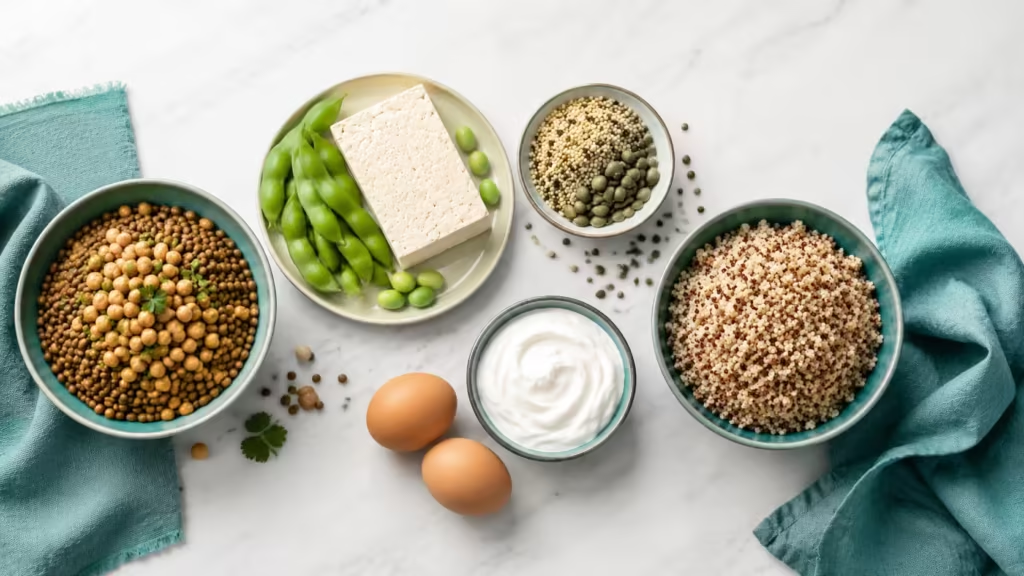
1. Legumes (Lentils, Chickpeas, Black Beans)
This is the most protein-dense plant food group. Legumes give you fiber, iron, and folate, with no cholesterol and very little fat. The American Heart Association lists them among the best heart-protective foods, linked to lower blood pressure, lower LDL (bad cholesterol), and better blood sugar control. One cup of cooked lentils has about 18 grams of protein. If you change only one thing, make it this: eat legumes daily.2. Soy Products (Tofu, Tempeh, Edamame)
Soy stands apart from nearly every other plant protein. By weight, soy foods run 36 to 40% protein, close to meat. Preparation matters too. Tempeh is fermented, which can make it easier to digest, and tofu is digested at around 95%. The American Heart Association specifically recommends soybeans as a plant protein. No other plant protein comes closer to matching what animal protein does for your body.3. Nuts and Seeds (Hemp and Pumpkin Seeds)
Most people see nuts as a fat source, and they are. But across a day, they add real protein too. Hemp seeds have a surprisingly balanced amino acid profile. Pumpkin seeds are protein-dense and rich in magnesium and zinc. Sprinkle them over salads, oatmeal, or smoothies, and the protein adds up fast. Higher nut intake is also linked to lower rates of heart disease and death from any cause.4. Quinoa
Quinoa stands apart from other grains because it contains all nine essential amino acids, which is rare for a plant food. It also brings fiber, magnesium, and B vitamins. Given the choice, pick quinoa over plain rice or pasta.5. Eggs and Dairy
This one is mainly for lacto-ovo-vegetarians. If eggs and dairy are already part of your day, you have access to complete, easily absorbed proteins that score at the top in DIAAS for quality. Two eggs give about 12 grams of protein. A serving of Greek yogurt gives 15 to 20. Either one is a simple way to round out your daily total.Frequently Asked Questions
Do vegetarians really get less protein than non-vegetarians?
Often, yes, but not because plant foods lack protein. With variety, a vegetarian diet can fully meet your protein needs from whole foods rather than powders.Do I need to combine proteins at every single meal?
No. Your body maintains an amino acid pool, so you do not need to combine proteins at every meal. What matters is variety throughout the day.Is soy safe to eat regularly?
For most people, yes. But if you have a specific health condition, check with your doctor first.Is plant protein as “good” as animal protein?
Yes, with the right plan, it is just as effective, with extra fiber and nutrients in it.How much protein do I need as a vegetarian?
Yes, you may need slightly more than average, although it depends on your body size, age, and activity level. A doctor or dietitian can help determine the right amount.Medical Disclaimer
Disclaimer: This article is for educational purposes only and is not a substitute for professional medical advice, diagnosis, or treatment. Always talk to a qualified healthcare professional if you have symptoms, concerns, or questions about your health.
References
- Freeman, A. M., Morris, P. B., Barnard, N., Esselstyn, C. B., Ros, E., Agatston, A., Devries, S., O’Keefe, J., Miller, M., Ornish, D., Williams, K., & Kris-Etherton, P. (2017). Trending cardiovascular nutrition controversies. Journal of the American College of Cardiology, 69(9), 1172–1187. https://doi.org/10.1016/j.jacc.2016.10.086
- Heymsfield, S. B., & Shapses, S. A. (2024). Guidance on energy and macronutrients across the life span. The New England Journal of Medicine, 390(14), 1299–1310. https://doi.org/10.1056/NEJMra2214275
- Lichtenstein, A. H., Appel, L. J., Vadiveloo, M., Hu, F. B., Kris-Etherton, P. M., Rebholz, C. M., Sacks, F. M., Thorndike, A. N., Van Horn, L., & Wylie-Rosett, J. (2021). 2021 dietary guidance to improve cardiovascular health: A scientific statement from the American Heart Association. Circulation, 144(23), 472–487. https://doi.org/10.1161/CIR.0000000000001031
- Lichtenstein, A. H., Khera, A., Anderson, C. A. M., Appel, L. J., DeSilva, D. M., Gardner, C., Hu, F. B., Jones, D. W., & Petersen, K. S. (2026). 2026 dietary guidance to improve cardiovascular health: A scientific statement from the American Heart Association. Circulation, 153(18). https://doi.org/10.1161/CIR.0000000000001435
- Naghshi, S., Sadeghi, O., Willett, W. C., & Esmaillzadeh, A. (2020). Dietary intake of total, animal, and plant proteins and risk of all cause, cardiovascular, and cancer mortality: Systematic review and dose-response meta-analysis of prospective cohort studies. BMJ, 370, m2412. https://doi.org/10.1136/bmj.m2412
- Pihlanto, A., Mattila, P., Mäkinen, S., & Pajari, A.-M. (2017). Bioactivities of alternative protein sources and their potential health benefits. Food & Function, 8(10), 3443–3458. https://doi.org/10.1039/c7fo00302a
Medical Disclaimer: This content is for informational purposes only and is not a substitute for professional medical advice, diagnosis, or treatment. Always consult a qualified healthcare provider about your health.
Sign Up to Our Newsletter
Be the first to know the latest health updates.

Previous Article
Sex After 40: What Changes and How to Make It Better?

